Vascular complications of acute pancreatitis
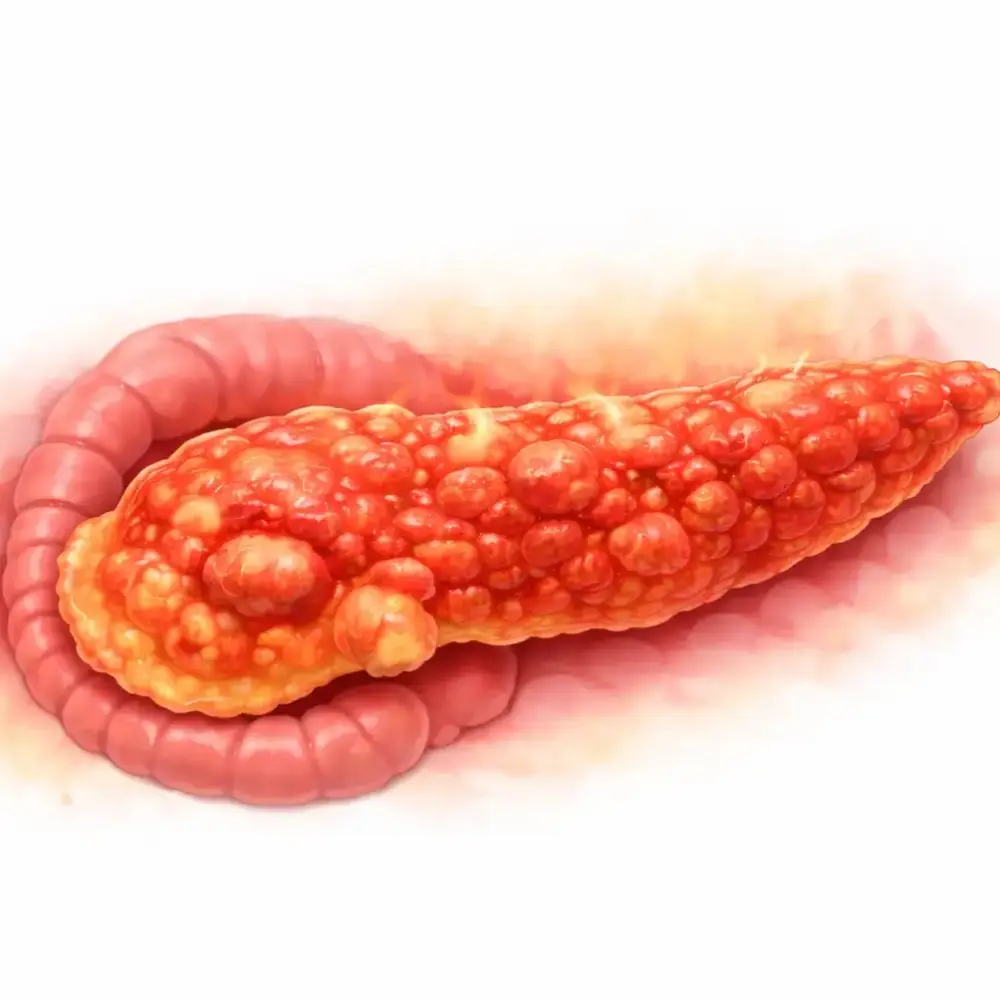
Vascular complications represent one of the most severe risks during the course of acute pancreatitis and can fundamentally affect the patient's prognosis. This interactive algorithm guides the user through the key phases of patient management when vascular involvement is suspected. It focuses on the correct diagnostic procedure for identifying the source of bleeding and on the decision-making process between available therapeutic methods. The aim of the algorithm is to demonstrate the optimal strategy for minimizing mortality and ensuring the timely detection of impending risks in clinical practice.
Review

The educational algorithm provides an accurate, logical, and highly structured description of the actual clinical pathway used in the diagnosis and management of vascular complications of acute pancreatitis. From an interventional radiology perspective, I particularly appreciate the systematic sequence of individual steps—from the initial assessment of the acutely ill patient, through the correct recognition of suspected bleeding and the appropriate selection of imaging modalities, to a properly indicated endovascular intervention. The entire process reflects current clinical practice and adheres to recommended diagnostic and therapeutic guidelines.
I also rate the didactic design of the algorithm very positively. The individual steps follow one another intuitively, guiding the student through clinical reasoning and decision-making in a manner similar to real-world hospital practice. Particularly valuable is the integration of theoretical knowledge with practical decision-making, which significantly enhances understanding of the subject.
The therapeutic approach using interventional radiology techniques is presented accurately, professionally, and in accordance with current recommendations. The algorithm appropriately explains the principles of the individual procedures, their advantages, the relevant anatomical considerations, and recommendations for post-procedural care. I also appreciate the emphasis placed on patient safety and the appropriate timing of intervention.
I consider the interactive nature of the educational format to be particularly successful. The system makes excellent use of game-based learning principles, markedly increasing user engagement and motivation. The witty and prompt responses to incorrectly selected answers feel natural, make a challenging medical topic more approachable, and at the same time help reinforce the correct management strategies. This approach makes learning more engaging and encourages active student participation without creating anxiety about making mistakes. The combination of professional accuracy, interactivity, and playful elements represents a highly modern and effective form of medical education.
Sources
AP/APA/EPC/IPC/JPS Working Group, 2025. International Association of Pancreatology revised guidelines on acute pancreatitis 2025: Supported and endorsed by the American Pancreatic Association, European Pancreatic Club, Indian Pancreas Club, and Japan Pancreas Society. Pancreatology [online]. 2025, vol. 25, no. 6, pp. 770–814 [accessed 2026-05-19]. Available from: https://doi.org/10.1016/j.pan.2025.04.020
EVANS, R.P., MOURAD, M.M., PALL, G., FISHER, S.G. and BRAMHALL, S.R., 2017. Pancreatitis: Preventing catastrophic haemorrhage. World Journal of Gastroenterology [online]. 2017, vol. 23, no. 30, pp. 5460–5468 [accessed 2026-05-19]. Available from: https://doi.org/10.3748/wjg.v23.i30.5460
KALAS, M.A., LEON, M., CHAVEZ, L.O., CANALIZO, E. and SURANI, S., 2022. Vascular complications of pancreatitis. World Journal of Clinical Cases [online]. 2022, vol. 10, no. 22, pp. 7665–7673 [accessed 2026-05-19]. Available from: https://doi.org/10.12998/wjcc.v10.i22.7665
MADHUSUDHAN, K.S., VENKATESH, H.A., GAMANAGATTI, S., GARG, P. and SRIVASTAVA, D.N., 2016. Interventional radiology in the management of visceral artery pseudoaneurysms: A review of techniques and embolic materials. Korean Journal of Radiology [online]. 2016, vol. 17, no. 3, pp. 351–363 [accessed 2026-05-19]. Available from: https://doi.org/10.3348/kjr.2016.17.3.351
TULSYAN, N., KASHYAP, V.S., GREENBERG, R.K., SARAC, T.P., CLAIR, D.G., PIERCE, G. and OURIEL, K., 2007. The endovascular management of visceral artery aneurysms and pseudoaneurysms. Journal of Vascular Surgery [online]. 2007, vol. 45, no. 2, pp. 276–283 [accessed 2026-05-19]. Available from: https://doi.org/10.1016/j.jvs.2006.10.049
KROKIDIS, M., KASHEF, E., PEYNIRCIOGLU, B., ROSSI, M. and TIPALDI, M.A., 2024. CIRSE standards of practice for the endovascular treatment of visceral and renal artery aneurysms and pseudoaneurysms. Cardiovascular and Interventional Radiology [online]. 2024, vol. 47, no. 1, pp. 26–35 [accessed 2026-05-19]. Available from: https://doi.org/10.1007/s00270-023-03620-w
MENDELSON, R.M., ANDERSON, J., MARSHALL, M. and RAMSAY, D., 2005. Vascular complications of pancreatitis. ANZ Journal of Surgery [online]. 2005, vol. 75, no. 12, pp. 1073–1079 [accessed 2026-05-19]. Available from: https://doi.org/10.1111/j.1445-2197.2005.03607.x
Learning targets
2. The student will be able to identify indications for interventional management in the context of acute pancreatitis associated with hemorrhage.
3. The student will be able to discuss the contraindications and complications of interventional procedures.
4. The student will be familiar with selecting the appropriate embolization technique as a potential interventional option.
Key points
2. Triple-phase CT angiography is the most accurate method for the rapid detection and localization of vascular damage or a pseudoaneurysm.
3. Endovascular embolization is the preferred solution, as it has a significantly lower mortality rate than risky surgical intervention.
4. A follow-up CT scan after 24 to 72 hours is essential to verify the success of the embolization and prevent recurrent bleeding.